Kindly fill up the following to try out our sandbox experience. We will get back to you at the earliest.
10 Essential Data Governance Framework Examples for Data Engineers
Explore 10 essential data governance framework examples to enhance information management and compliance.

Introduction
As organizations strive to harness the power of data, they often face significant hurdles in establishing effective governance frameworks. In today's rapidly evolving landscape of data management, the critical importance of robust data governance frameworks cannot be overstated. These frameworks, however, present challenges such as integration, compliance, and the necessity for tailored solutions.
This article explores ten essential data governance framework examples that empower data engineers to navigate the complexities of information management, streamline workflows, and foster trust in data. Data engineers must adopt strategic approaches to navigate these hurdles and fully leverage the benefits of effective data governance.
Decube: A Unified Data Trust Platform for Enhanced Governance
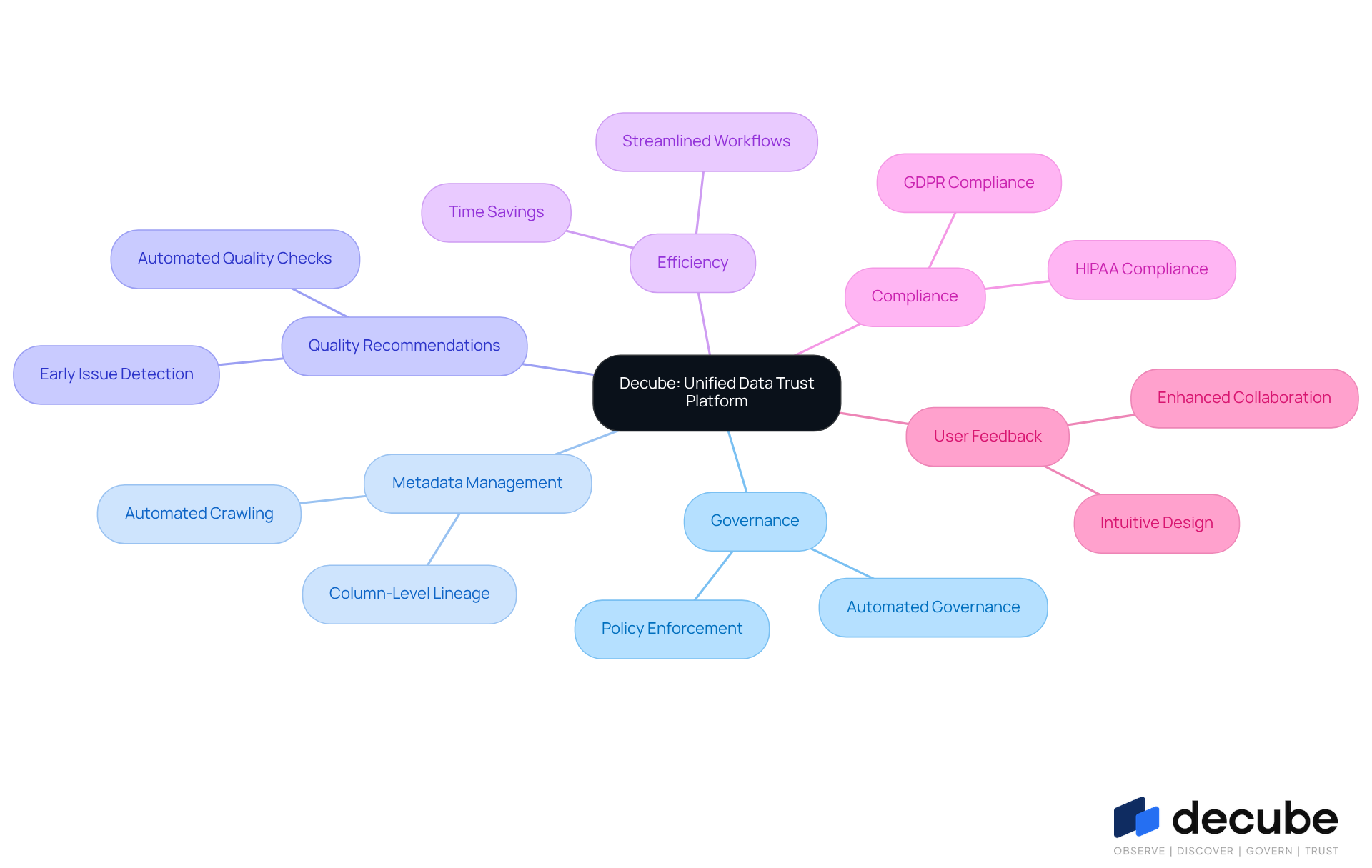
In an era where effective information governance is paramount, Decube stands out as a leading context platform, enhancing governance through a unified approach tailored for the AI era. Its advanced metadata management features are crucial, showcasing column-level lineage that permits accurate tracing of information flow, and pipeline observability that visualizes information flow, facilitating precise impact analysis and troubleshooting.
Furthermore, Decube CoPilot provides automated quality recommendations, simplifying the process of upholding high standards. Organizations face significant challenges, reportedly spending around 40% of their time transforming information between formats, which underscores the efficiency that Decube introduces to information management.
By incorporating these functionalities, Decube effectively addresses the complexities inherent in information management, allowing entities to maintain privacy and security while optimizing their assets. This extensive framework not only tackles the urgent issues of information governance but also enables entities to utilize their information efficiently in a swiftly changing environment.
As regulatory pressures rise, Decube's solutions become increasingly essential for organizations aiming to showcase effective information management practices. Feedback from users indicates that Decube's intuitive design and robust UI/UX significantly enhance operational efficiency, streamlining workflows and improving information trust.
For example, Bhupinder S. emphasized how Decube's platform enables simple monitoring of quality, facilitating the early detection of issues. The platform's automated crawling capability guarantees easy metadata management, while its comprehensive lineage visualization offers clarity and promotes collaboration among teams.
With Decube, organizations can confidently navigate the complexities of information management, ensuring compliance with standards such as GDPR, HIPAA, SOC 2, and ISO 27001, which are core security assurances that enhance trust in their management practices. As organizations strive to meet stringent regulatory standards, Decube's capabilities become indispensable for maintaining compliance and trust.

DAMA-DMBOK: Comprehensive Data Management Framework
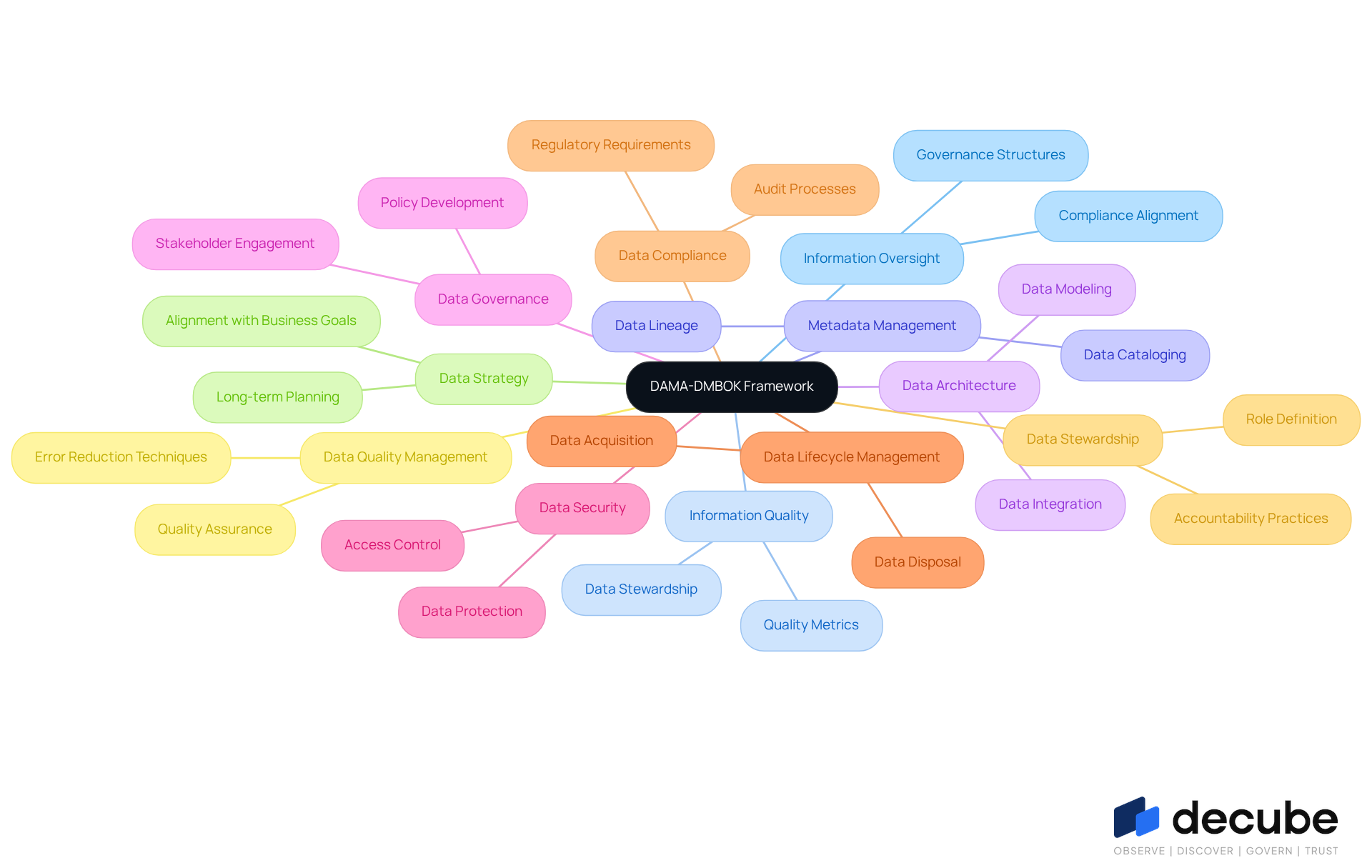
The DAMA-DMBOK framework serves as a cornerstone for effective information management, addressing critical areas essential for organizational success. It encompasses 11 vital knowledge areas, including information oversight, information quality, and metadata management. Following DAMA-DMBOK principles enables engineers to establish governance structures that ensure integrity, enhance compliance, and align with business objectives. This framework emphasizes the necessity of clearly defined roles, responsibilities, and processes, facilitating effective information management across the organization.
In the telecommunications industry, the influence of information stewardship on quality is particularly significant. Organizations that implement robust information stewardship practices experience measurable improvements in quality metrics, which are essential for sustaining competitive advantage and operational efficiency. Additionally, organizations using the DAMA-DMBOK framework have seen improvements in compliance rates, effectively navigating complex regulatory landscapes.
Optimal methods for engineers in 2026 involve incorporating DAMA-DMBOK principles into daily operations, promoting a culture of accountability, and employing quality management tools that align with the framework's standards. Real-world instances illustrate how organizations have effectively embraced DAMA-DMBOK for information management, providing data governance framework examples that lead to improved quality management and compliance outcomes. DAMA-DMBOK emphasizes data stewardship, which not only aids in regulatory compliance but also fosters a strategic view of data as a vital organizational asset. Ultimately, embracing DAMA-DMBOK principles transforms data into a strategic asset, driving both compliance and competitive advantage.

COBIT: Aligning IT Governance with Business Objectives
COBIT serves as a vital framework that bridges the gap between IT management and business objectives, particularly in sectors like financial services and telecommunications. By providing a structured set of best practices and tools, COBIT enables organizations to effectively manage and govern their IT resources. For information engineers, the application of COBIT means ensuring that management practices are not only compliant but also strategically aligned with organizational objectives. This alignment is essential because it improves decision-making and increases the value derived from data assets.
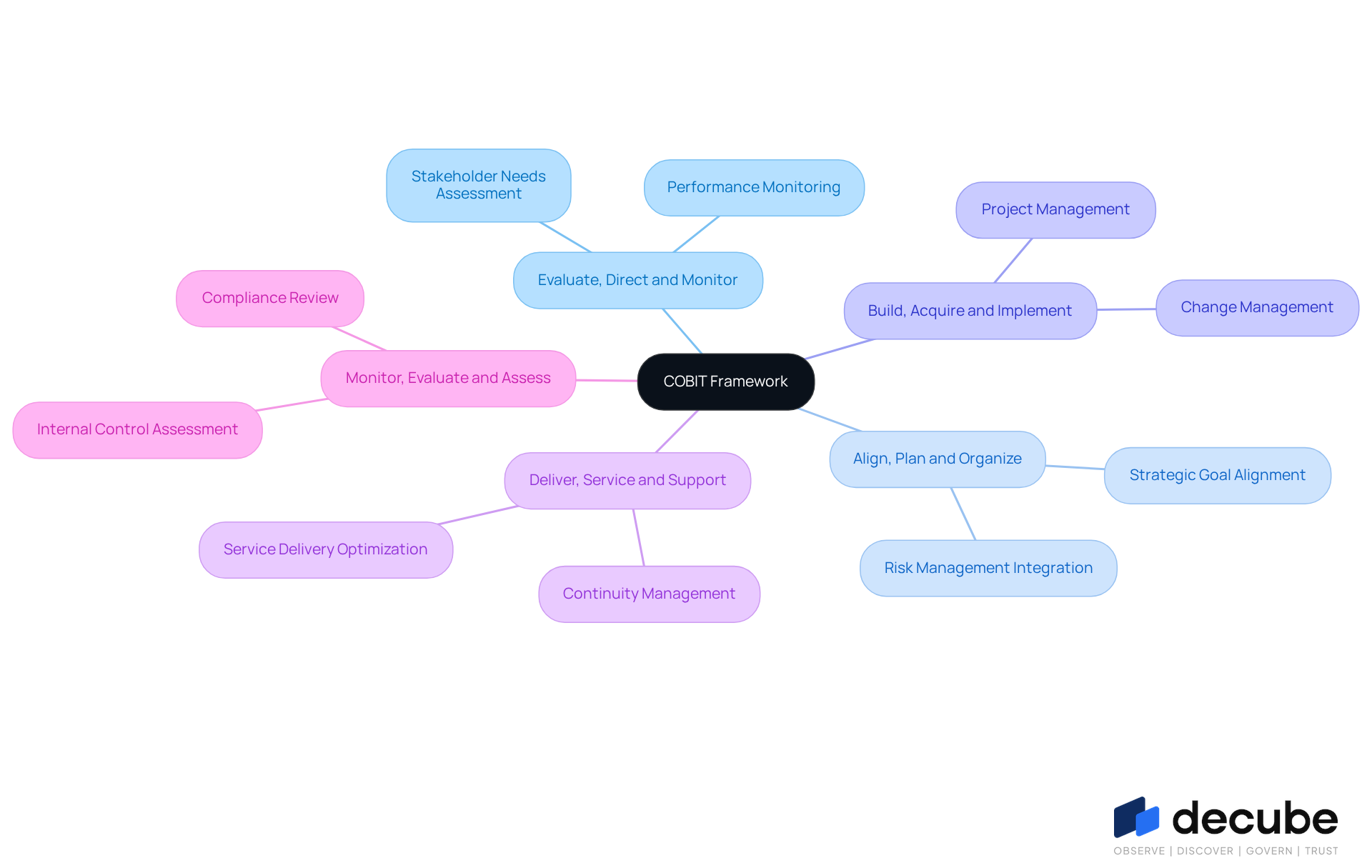
The influence of COBIT on IT oversight is profound, as it organizes oversight and management tasks into 40 objectives across five domains:
- Evaluate, Direct and Monitor
- Align, Plan and Organize
- Build, Acquire and Implement
- Deliver, Service and Support
- Monitor, Evaluate and Assess
This structured approach ensures that IT investments support strategic priorities, thereby enhancing stakeholder accountability and optimizing resource use.
Recent updates to COBIT emphasize the critical need for organizations to regularly reevaluate their management designs, enabling entities to adjust to evolving business landscapes and regulatory demands. For instance, the integration of DORA and NIS2 compliance requirements into COBIT objectives provides a framework for organizations to demonstrate compliance while managing risks effectively.
In this context, Decube emerges as a unified information trust platform that enhances observability, governance, and quality assurance. With features such as automated crawling for effortless metadata management and a strong emphasis on lineage, Decube guarantees that quality is upheld without the necessity for extensive manual intervention. This feature is particularly beneficial for engineers, streamlining workflows and building trust in information across teams. Moreover, Decube's adherence to GDPR, HIPAA, SOC 2, and ISO 27001 certifications offers crucial security guarantees, establishing it as a trustworthy option for entities in the financial services and telecommunications sectors. Customer testimonials showcase Decube's intuitive design and robust UI/UX, further underscoring its role in improving information management and observability. Incorporating Decube into information management strategies not only enhances data integrity but also positions organizations to navigate compliance challenges effectively.

DCAM: Data Governance for Financial Services
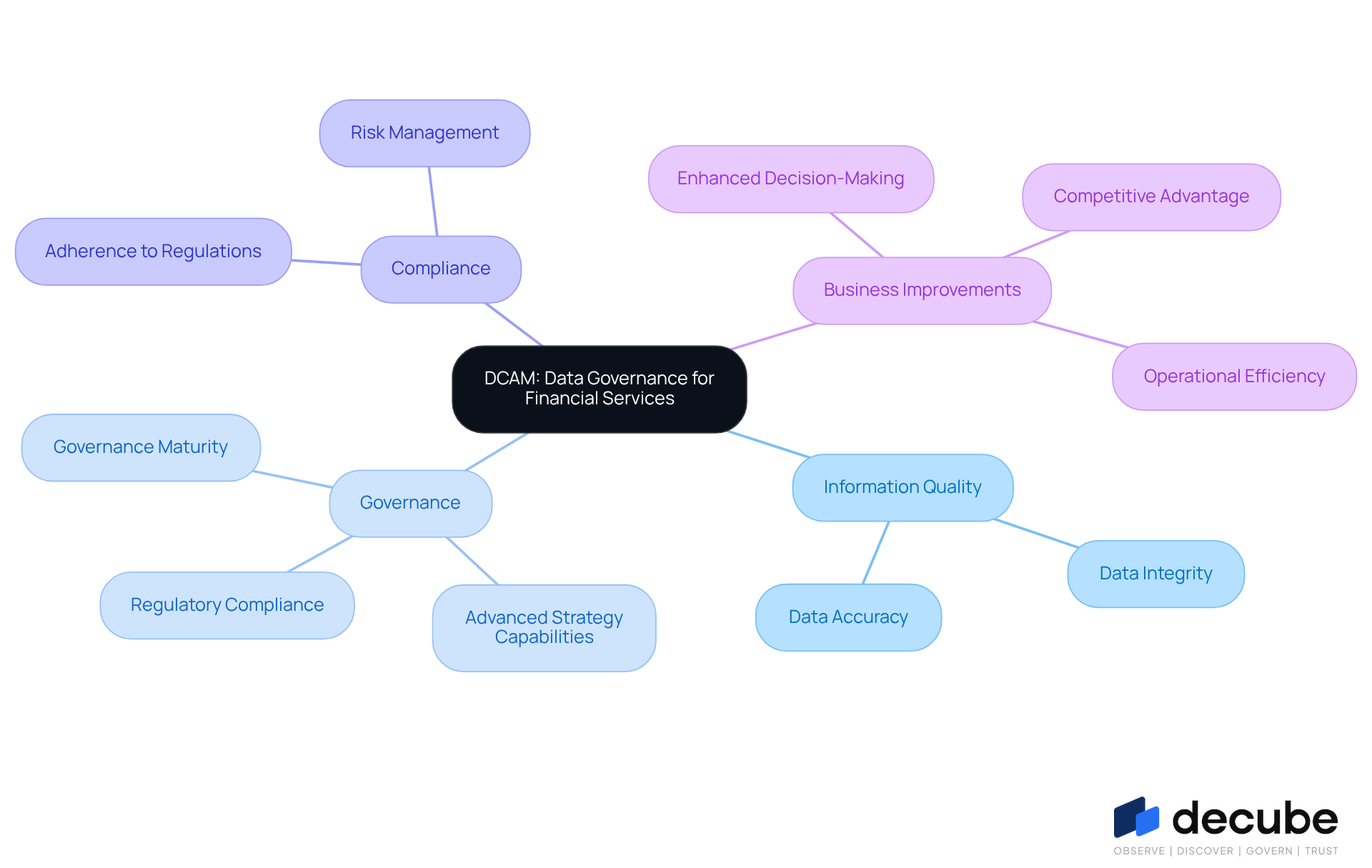
The Information Management Capability Assessment Model (DCAM) serves as a vital framework for the financial services sector, addressing the critical need for effective information management. Focusing on critical elements like information quality, governance, and compliance, DCAM empowers entities to effectively navigate stringent regulatory demands.
For information engineers, adopting DCAM means applying best practices that maintain integrity and support compliance with regulatory requirements. This structured approach not only simplifies compliance but also drives significant business improvements.
Recent findings suggest that entities employing DCAM report substantial enhancements in governance maturity, with 31% of firms attaining advanced strategy capabilities, highlighting the model's role in connecting AI ambitions and readiness.
Ultimately, the adoption of DCAM positions entities to not only meet regulatory standards but also to leverage their information management capabilities for strategic advantage.

Data Quality Management Frameworks: Ensuring Reliable Governance
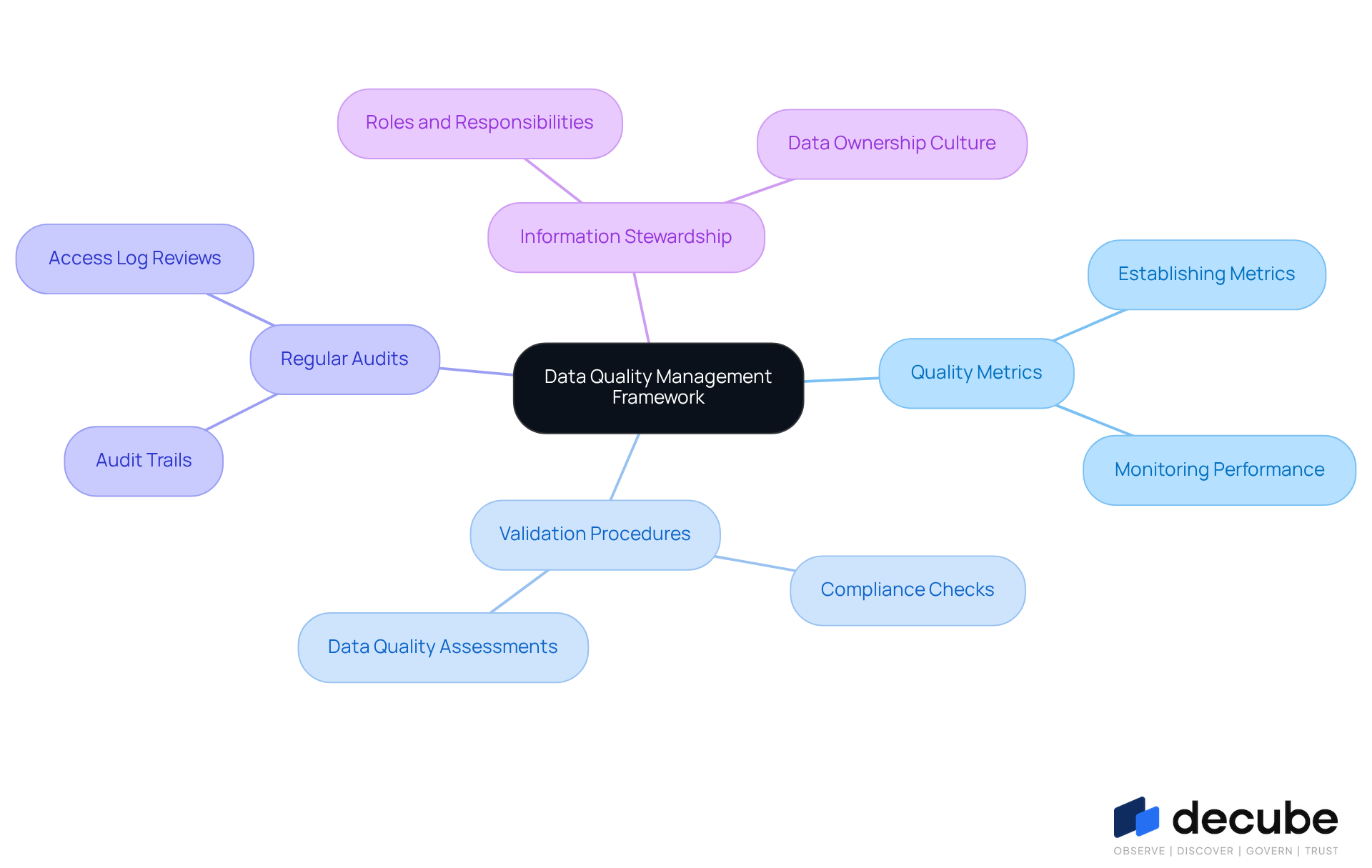
In an era where information quality is paramount, organizations must adopt effective quality management systems to navigate complex regulatory landscapes. Quality management systems offer crucial approaches for evaluating, overseeing, and improving information quality within organizations. These structures emphasize the importance of establishing quality metrics, executing validation procedures, and performing regular audits. For information engineers, adopting a robust quality management framework is vital to ensure that information remains accurate, complete, and reliable. This reliability is essential for efficient information management, as high-quality information supports informed decision-making and adherence to regulatory standards.
In 2024, more than 65% of information leaders prioritized information management over other issues, such as AI and information quality, highlighting its essential role in handling information efficiently amidst rising regulatory pressures. As organizations face increasing regulatory pressures, the challenge of prioritizing effective information management becomes more pronounced. Inadequate information quality can lead to significant financial losses, costing firms up to 12% of their income, while 60% to 73% of information often goes unutilized for strategic objectives. This highlights the need for strong oversight to enhance information usage.
Real-world examples illustrate the effect of structured methods within data governance framework examples. For instance, a clinical-stage pharmaceutical company utilized a Clinical Data Management System (CDMS) with admin-level access controls, enabling daily security monitoring and achieving a detection-to-action window of within 24 hours. This proactive approach ensured compliance and built trust in the organization’s information handling practices.
Organizations are recognizing that effective information stewardship is crucial for meeting regulatory requirements. Effective information stewardship involves assigning clear roles and responsibilities, which fosters a culture of accountability and collaboration. This is crucial for preserving high information quality and ensuring that management policies are executed effectively.
Ultimately, organizations that neglect information quality metrics risk not only compliance failures but also significant operational inefficiencies. The incorporation of information quality metrics within management structures is not merely a best practice; it is essential for entities striving to succeed in a metrics-driven environment. By prioritizing data quality and stewardship, entities can enhance their operational efficiency, ensure compliance, and ultimately drive better decision-making.

AI Governance Framework: Managing Data in the Age of AI
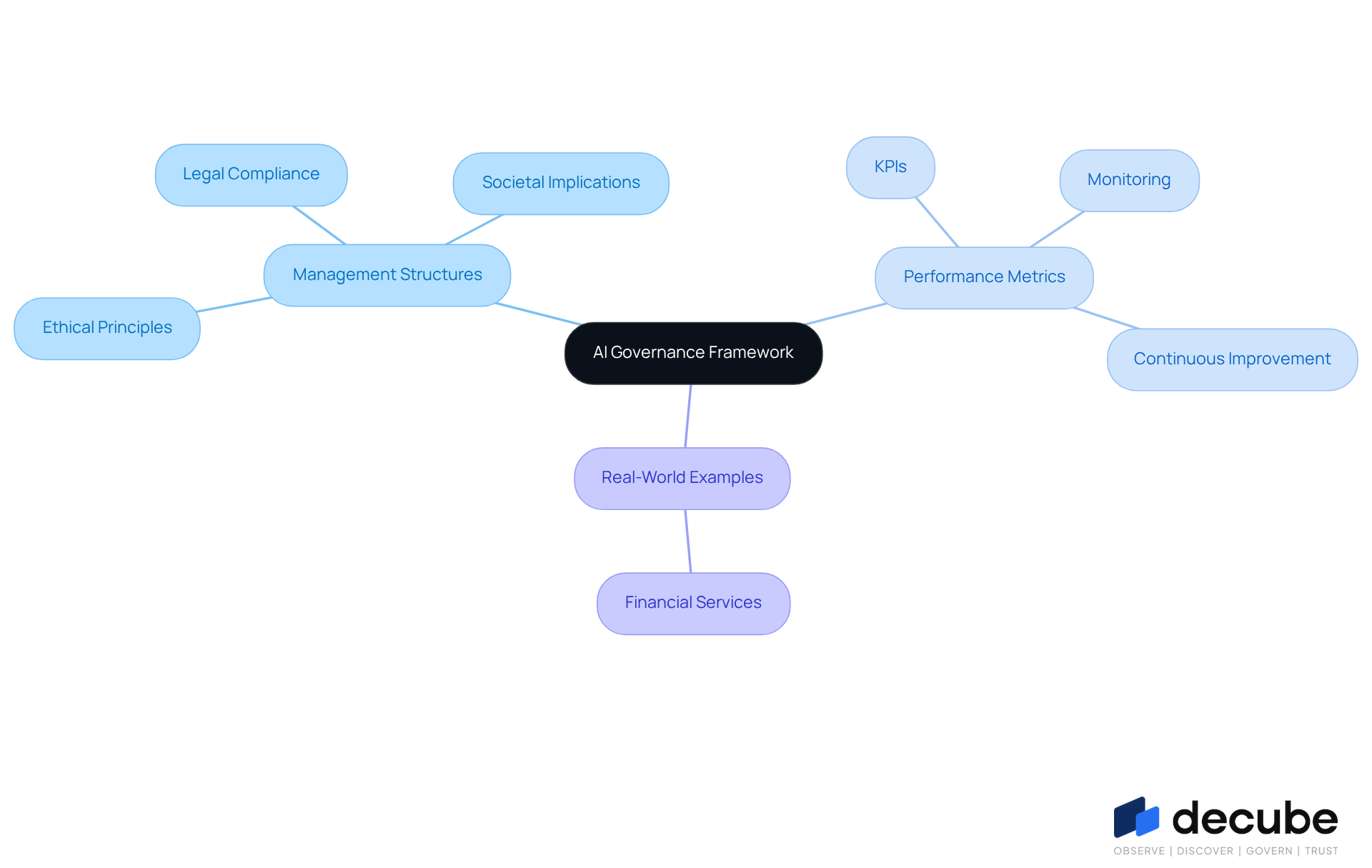
Establishing effective AI management structures is crucial for organizations leveraging artificial intelligence in their operations. These structures outline the principles necessary for addressing the ethical, legal, and societal implications of AI technologies. Information engineers must establish an AI oversight framework that guarantees the information used in AI models is accurate, unbiased, and compliant with regulations. This management is vital for maintaining trust in AI systems and ensuring they deliver value without compromising ethical standards.
Real-world examples demonstrate how aligning information management with business strategy can enhance operational efficiency. For instance, entities in the financial services industry have successfully incorporated performance metrics into their management frameworks, allowing them to monitor information quality and compliance efficiently. This alignment enhances regulatory compliance and cultivates a culture of accountability and ongoing improvement.
Performance metrics play a significant role in the success of information management initiatives. By establishing key performance indicators (KPIs), organizations can measure the effectiveness of their management strategies and make informed decisions. Frequent evaluations of these metrics assist in recognizing areas for improvement, ensuring that information management practices develop in accordance with business goals.
Recent updates to the PwC framework highlight the significance of information management performance metrics in driving organizational success. By concentrating on metrics that correspond with business objectives, companies can enhance their governance efforts, ultimately resulting in better quality, security, and compliance. This strategic approach not only reduces risks linked to information management but also improves the overall value obtained from information assets. Ultimately, organizations that prioritize effective information management will be better equipped to navigate the complexities of AI technologies.

Compliance Frameworks: Meeting Regulatory Requirements
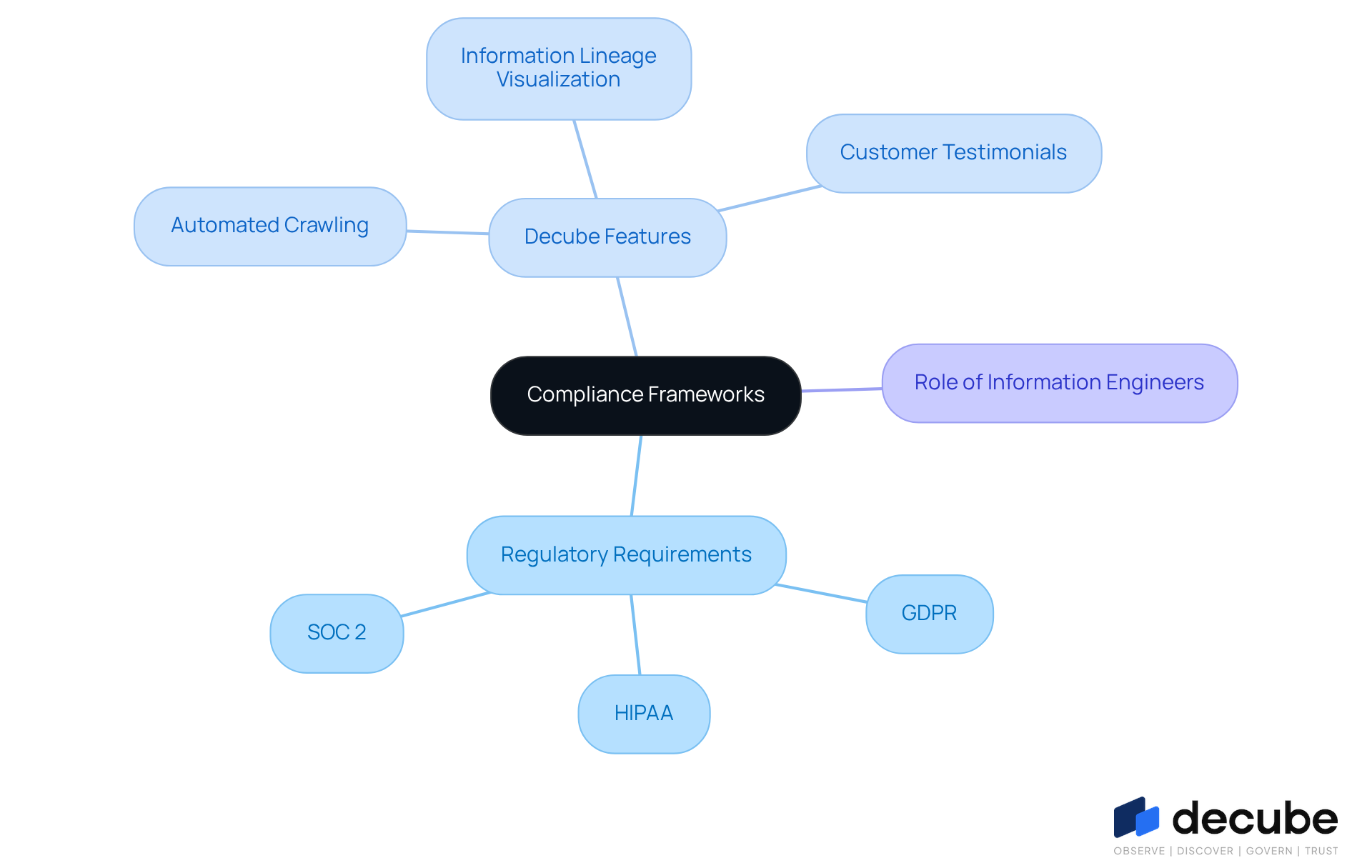
Navigating the complex landscape of legal and regulatory obligations poses significant challenges for organizations, particularly in information management. This is especially true in sectors such as finance, healthcare, and telecommunications, where information privacy and security are paramount. For information engineers, a thorough comprehension of compliance frameworks ensures that information management practices align with regulations such as GDPR, HIPAA, and SOC 2. This alignment mitigates risks and enhances the organization's reputation and trustworthiness.
Decube offers a unified trust platform that improves observability, governance, and quality assurance, positioning it as a critical resource for information management professionals. Its automated crawling feature ensures that metadata is continuously updated without manual intervention, streamlining the information management process. Furthermore, Decube's end-to-end information lineage visualization enables teams to monitor flow across components, promoting transparency and collaboration.
Real-world examples demonstrate the impact of Decube's management tools on information quality. Organizations have effectively employed Decube to enhance their security posture and simplify information management processes, showcasing the concrete advantages of incorporating a comprehensive information oversight solution. Customer testimonials emphasize Decube's intuitive design and robust UI/UX, which greatly enhance workflows and information trust.
As the demand for efficient information management escalates, engineers play a pivotal role in implementing these compliance structures. By leveraging Decube's capabilities, organizations can transform compliance challenges into opportunities for enhanced operational integrity and stakeholder trust.

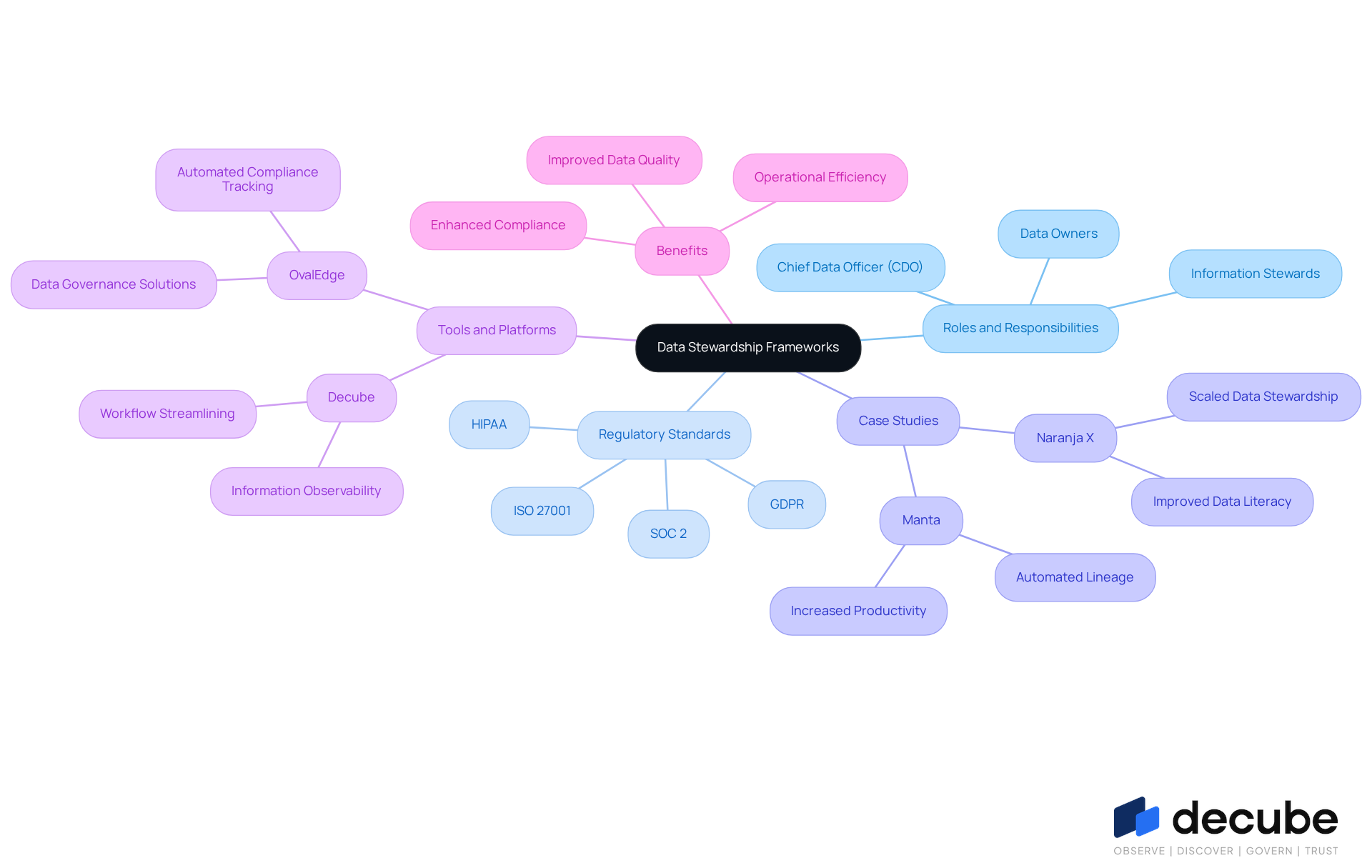
Data Stewardship Frameworks: Ensuring Accountability and Ownership
Effective information stewardship structures are crucial for defining accountability in information management within organizations. These structures clearly outline the roles and responsibilities of information stewards, who are vital for ensuring quality, compliance, and accessibility. In 2026, fostering accountability in information management is increasingly essential, particularly as entities face rising regulatory pressures and the complexities of information oversight, including adherence to standards such as GDPR, HIPAA, SOC 2, and ISO 27001.
Establishing a strong stewardship framework mitigates risks and empowers teams to make informed decisions based on reliable information. For example, organizations such as Naranja X have effectively expanded their information stewardship initiatives, enhancing information literacy and ensuring that a substantial portion of their information lake is managed. This proactive approach to information stewardship significantly enhances compliance and quality, as evidenced by case studies from leading organizations, showcasing the effectiveness of assigning clear accountability in management.
With Decube's unified platform for information observability and management, engineers can leverage its intuitive design to streamline workflows and enhance trust in the information. The platform's lineage feature offers clarity in information pipelines, ensuring that information remains precise and consistent, which is vital for effective stewardship. Feedback from clients highlights how Decube enhances information governance and observability, rendering it a valuable resource for entities seeking to enhance their management practices.
Ultimately, the integration of robust stewardship frameworks can transform how organizations approach information governance, leading to enhanced operational efficiency and compliance.

Data Lineage Frameworks: Ensuring Transparency in Data Flow
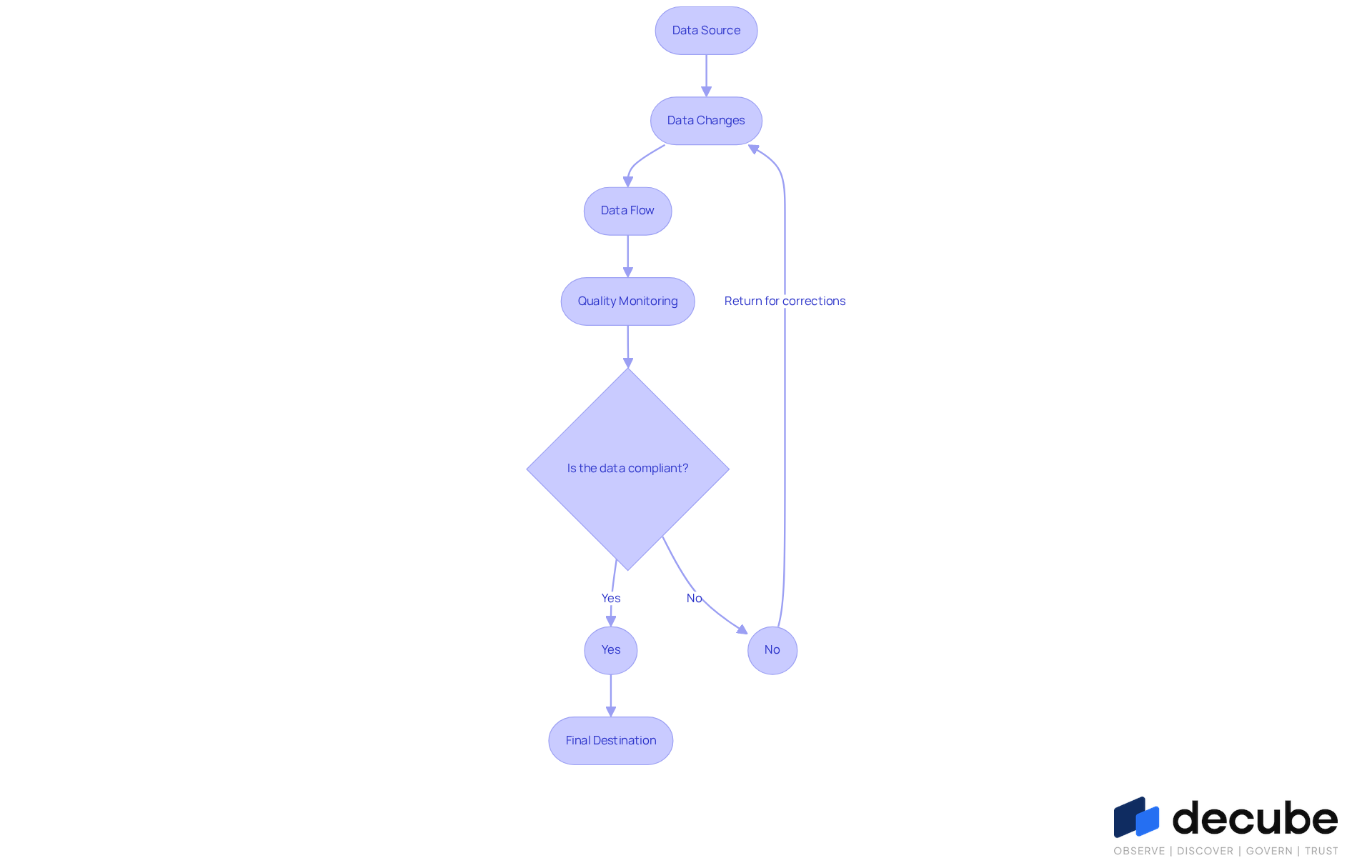
Information lineage structures offer a systematic method for documenting and visualizing the flow of information throughout its lifecycle. These structures enable organizations to track the sources of information, comprehend its changes, and determine its final destinations. For engineers, implementing a lineage framework is crucial for fostering transparency and accountability in management. This transparency helps achieve regulatory compliance and improves information quality by allowing teams to quickly identify and resolve issues in information flows.
Decube effectively uses automated lineage tracking, with a design that builds trust in information and simplifies workflows. With features like end-to-end information lineage visualization and automated quality monitoring, Decube enables organizations to quickly trace information flows, identify root causes, and assess downstream impacts, ensuring compliance and operational efficiency. Firms in the financial industry are progressively embracing active management frameworks that incorporate information lineage into their workflows, fostering collaboration among teams and improving trust in information handling practices.
Automation significantly enhances information management practices. By automating lineage tracking, Decube minimizes manual errors and enhances the speed of issue resolution, resulting in a more agile information management environment. Studies show that entities utilizing AI-powered information management solutions can attain a 30% decrease in the time needed for regulatory compliance procedures. As Aryan Sharma observes, contemporary management structures depend significantly on automation and integration with information platforms, transforming oversight into an operational aspect instead of a distinct effort. This shift not only streamlines processes but also reinforces the importance of transparency in information flow, ultimately driving better decision-making and accountability across the organization. Moreover, by 2026, it is anticipated that over 60% of information management decisions will be completely automated, emphasizing the future trajectory of information oversight. Furthermore, Decube's adherence to GDPR, HIPAA, SOC 2, and ISO 27001 certifications further reinforces its trustworthiness in information management.

Custom Data Governance Frameworks: Tailoring to Organizational Needs
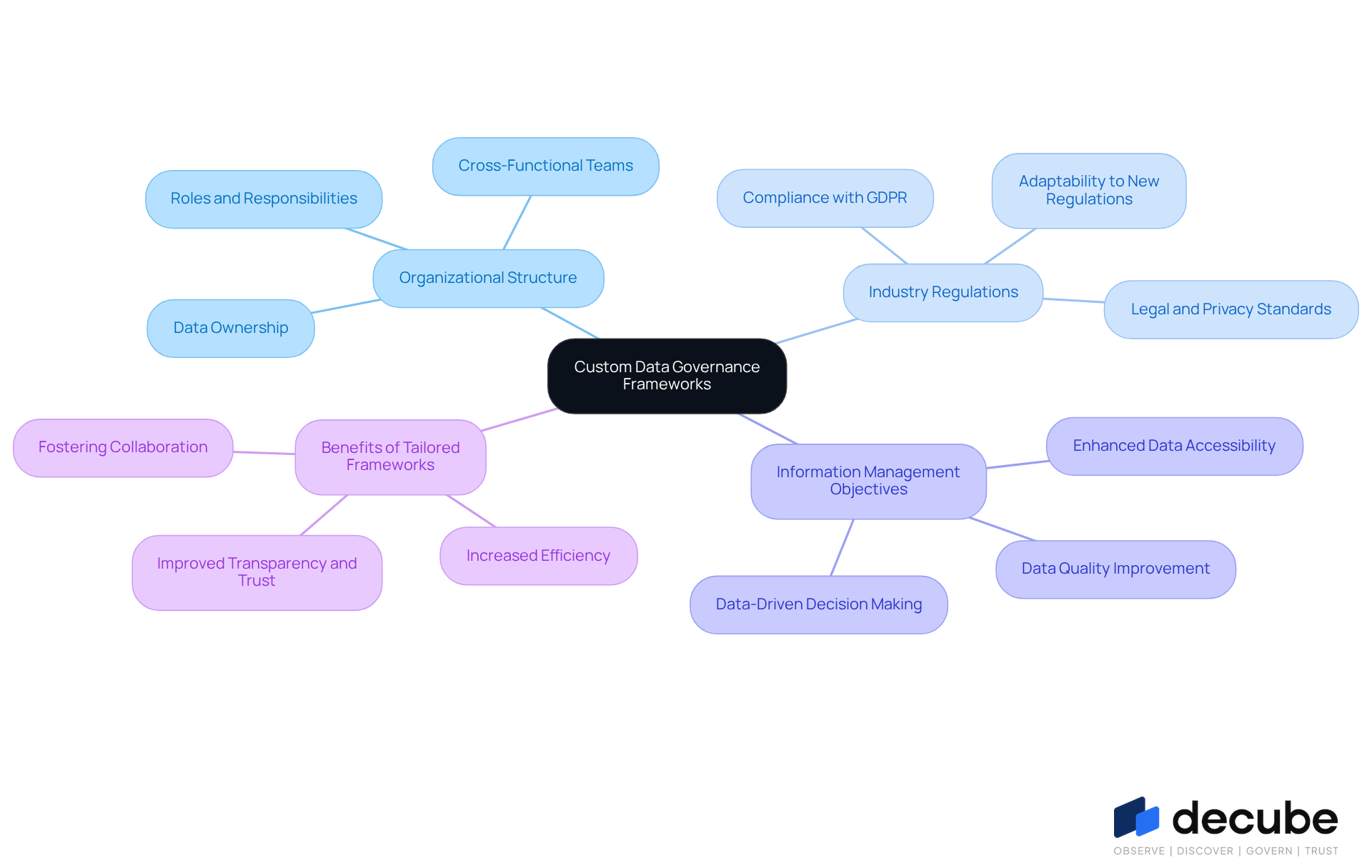
Tailored information management structures are crucial for organizations aiming to navigate complex operational landscapes. These systems must account for various factors, including:
- Organizational structure
- Industry regulations
- Specific information management objectives
For information engineers, creating a customized oversight framework guarantees alignment with the entity's strategic goals while tackling specific information challenges. This tailored approach not only improves the effectiveness of management practices but also fosters an environment that prioritizes data-driven decision-making.
Adaptability in management is essential; organizations that adopt agile methodologies can react quickly to evolving information environments, enhancing collaboration and efficiency. Industry specialists emphasize that effective information management can transform disorder into clarity, fostering transparency and trust in information.
The iterative processes inherent in agile management allow for continuous refinement, ensuring that oversight structures remain relevant and impactful. By prioritizing tailored data governance framework examples, organizations can significantly enhance their data management effectiveness, ultimately driving better business outcomes.

Conclusion
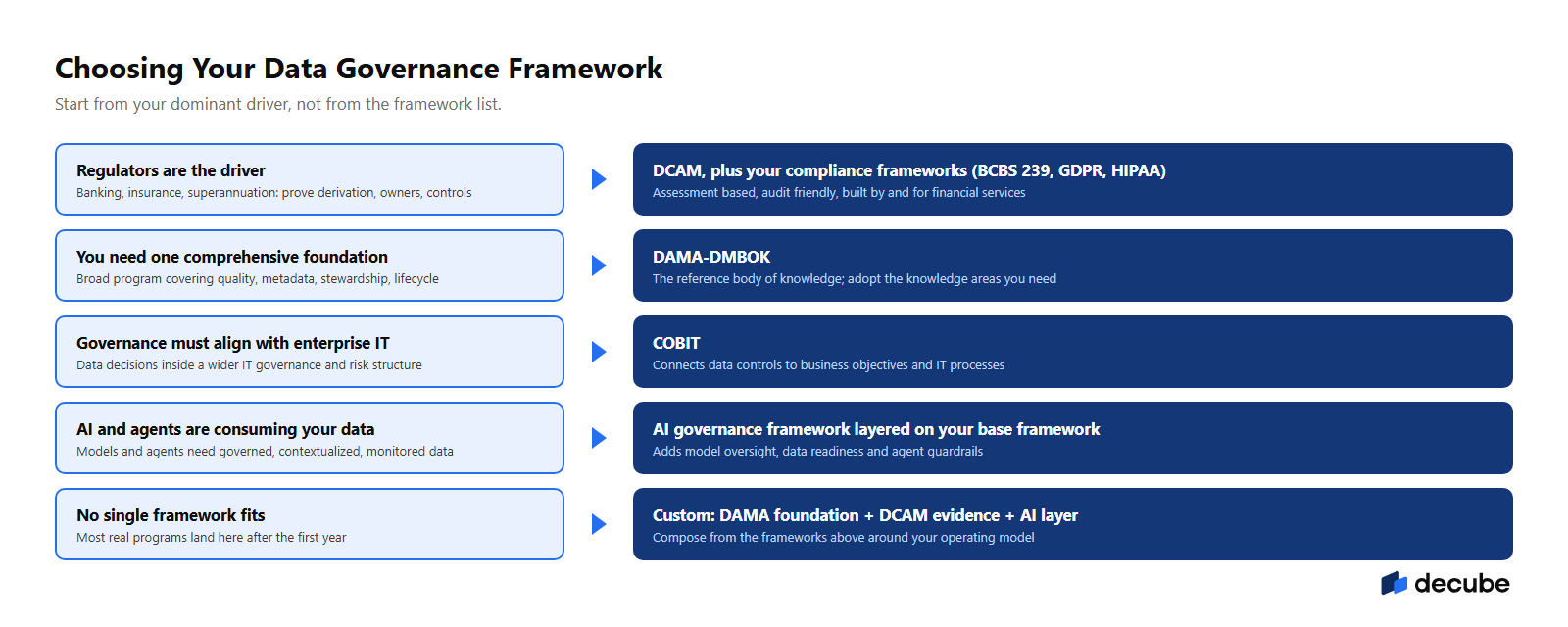
In an era of increasing regulatory scrutiny, organizations must prioritize robust data governance frameworks to thrive. The frameworks discussed in this article, including Decube, DAMA-DMBOK, COBIT, and DCAM, provide essential strategies and tools tailored for data engineers in the financial services and telecommunications sectors. Adopting these frameworks enables organizations to significantly improve their information management practices, ensuring compliance with standards such as GDPR, HIPAA, SOC 2, and ISO 27001, while also fostering a culture of accountability and trust.
Key insights from the article highlight how frameworks like Decube streamline workflows through its unified data trust platform, which integrates cataloging, lineage, quality, and observability without the need for third-party tools. The DAMA-DMBOK framework emphasizes the significance of clearly defined roles and responsibilities, while COBIT aligns IT governance with business objectives, enhancing decision-making and resource optimization. Furthermore, the DCAM framework empowers financial services organizations to meet stringent regulatory demands, driving improvements in governance maturity and strategic capabilities.
In conclusion, the adoption of tailored data governance frameworks is a critical necessity for organizations aiming to excel in today's complex regulatory environment. Focusing on effective information management allows organizations to transform compliance challenges into opportunities for enhanced operational integrity and stakeholder trust. Ultimately, the strategic implementation of these frameworks can redefine an organization's approach to compliance and operational excellence.
Frequently Asked Questions
What is Decube and how does it contribute to data governance?
Decube is a comprehensive data governance framework designed to manage unstructured data effectively. It provides high-fidelity context essential for management through advanced metadata management, which includes automated suggestions and real-time monitoring.
What are the key features of Decube?
Key features of Decube include:
- Column-level lineage for precise tracing of information flow.
- Pipeline observability to identify bottlenecks.
- A glossary that connects information with business terminology.
How does Decube ensure compliance with industry standards?
Decube enhances information management by ensuring compliance with standards such as SOC 2 and GDPR. This guarantees that information remains precise, consistent, and secure, which is critical for organizations, especially in regulated sectors like financial services.
What benefits do users report from using Decube?
Users have praised Decube for its intuitive design and robust UI/UX, noting that it effectively streamlines workflows and builds trust in information management. It has been recognized for improving information quality and aiding in better business decisions.
What is the DAMA-DMBOK framework and its significance?
The DAMA-DMBOK framework provides best practices for effective information management, focusing on areas like information quality management, stewardship, and compliance. It emphasizes the importance of defined roles, robust policies, and maintaining information integrity.
How does the DAMA-DMBOK framework impact decision-making in organizations?
Organizations that follow DAMA-DMBOK principles experience better compliance and operational efficiencies, including a 25% faster decision-making process. This is particularly beneficial in industries facing regulatory scrutiny, such as telecommunications.
What role does COBIT play in IT governance?
COBIT serves as a framework that integrates IT management with information governance. It provides guidelines for managing IT resources efficiently, ensuring that information management aligns with organizational goals and enhances risk management.
How does COBIT help organizations in the financial services sector?
In the financial services sector, COBIT helps organizations customize management systems to meet specific regulatory and risk oversight challenges, leading to improved information quality and security.
What are the benefits of implementing a structured approach to information management?
Implementing a structured approach, such as those outlined in DAMA-DMBOK and COBIT, helps organizations maintain compliance, enhance information quality, and improve operational efficiencies, ultimately transforming data into a strategic asset.
How does Decube integrate with the principles of DAMA-DMBOK and COBIT?
Decube aligns with the principles of DAMA-DMBOK and COBIT by offering features like automated monitoring and lineage visualization, which enhance information quality and oversight, ensuring compliance with regulatory standards.
List of Sources
- Decube: A Unified Data Trust Platform for Enhanced Governance
- Why metadata management now defines AI scale - SiliconANGLE (https://siliconangle.com/2026/01/23/metadata-management-ai-scale-challenges-futureofdataplatforms)
- Data Governance in the AI Era: 10 Shifts Redefining Data, Institutions, and Practice (https://sverhulst.medium.com/data-governance-in-the-ai-era-10-shifts-redefining-data-institutions-and-practice-69296b808683)
- The 20 Biggest AI Governance Statistics and Trends of 2025 (https://knostic.ai/blog/ai-governance-statistics)
- 7 Best Data Governance Tools for Reliable Data Quality | Decube (https://decube.io/post/7-best-data-governance-tools-for-reliable-data-quality)
- What “Good” Data Governance Looks Like in 2026 (https://acceldata.io/blog/what-modern-data-governance-actually-looks-like-in-2026)
- Quotes Related to Data and Data Governance (https://blog.idatainc.com/quotes-related-to-data-and-data-governance)
- DAMA-DMBOK: Comprehensive Data Management Framework
- DAMA-DMBOK® 3.0 Project (https://dama.org/dama-dmbok-3-0-project)
- Aligning DAMA-DMBOK & DCAM®: (R)Evolution in the Industry? - Data Crossroads (https://datacrossroads.nl/2025/07/09/aligning-dama-dmbok-dcam-revolution-in-the-industry)
- DAMA-DMBOK by DAMA International | Summary, Audio, Quotes, FAQ (https://sobrief.com/books/dama-dmbok)
- Data Governance Statistics | 2026 Edition – Gitnux (https://gitnux.org/data-governance-statistics)
- DAMA International launches DMBOK 3.0 with community-driven updates | Martin Whiley posted on the topic | LinkedIn (https://linkedin.com/posts/martin-whiley-a15929149_the-global-data-management-community-dama-dmbok-activity-7407017138978189313-D0VF)
- DAMA-DMBOK Explained: Data Management Framework | Snowflake (https://snowflake.com/en/data-governance/frameworks/dama-dmbok)
- COBIT: Aligning IT Governance with Business Objectives
- COBIT guide: Principles, enablers, and IT governance explained (https://optro.ai/blog/cobit)
- What Is the COBIT Framework? Governance Guide | Snowflake (https://snowflake.com/en/data-governance/frameworks/cobit)
- The Ultimate Guide to COBIT for 2026 (https://metricstream.com/learn/cobit-ultimate-guide.html)
- Future Trends in IT Governance: Evolution of COBIT Framework (https://icertglobal.com/blog/future-trends-in-it-governance-the-evolution-of-cobit-blog)
- DCAM: Data Governance for Financial Services
- 2026 Global Data Management Benchmark Report Released by EDM (https://digitalitnews.com/2026-global-data-management-benchmark-report-released-by-edm)
- EDM Association Benchmark Reveals Growing Gap Between Data Management Capability and AI Implementation (https://globenewswire.com/news-release/2026/05/19/3297382/0/en/edm-association-benchmark-reveals-growing-gap-between-data-management-capability-and-ai-implementation.html)
- Understanding Data Governance Framework Adoption Across Industries (Preliminary Findings) (https://medium.com/my-column-has-nulls/understanding-data-governance-framework-adoption-across-industries-preliminary-findings-fabebd0dbf72)
- Announcing DCAM v3: Meet the new standard for your data - EDM Council (https://edmcouncil.org/announcement/announcing-dcam-v3-meet-the-new-standard-for-your-data)
- DAMA-DMBOK2 vs DCAM®2.2: Usage Statistics - Data Crossroads (https://datacrossroads.nl/2021/03/31/dama-dmbok2-vs-dcam-2-2-usage-statistics)
- EDM Association Benchmark Reveals Growing Gap Between Data Management Capability and AI Implementation - EDM Council (https://edmcouncil.org/announcement/edm-association-benchmark-reveals-growing-gap-between-data-management-capability-and-ai-implementation)
- Data Management - DCAM - EDM Council (https://edmcouncil.org/frameworks/dcam)
- Data Quality Management Frameworks: Ensuring Reliable Governance
- New Global Research Points to Lack of Data Quality and Governance as Major Obstacles to AI Readiness (https://prnewswire.com/news-releases/new-global-research-points-to-lack-of-data-quality-and-governance-as-major-obstacles-to-ai-readiness-302251068.html)
- Achieving Data Quality and Regulatory Compliance Through Robust Governance (https://usdm.com/resources/blogs/achieving-data-governance)
- Data Governance Statistics And Facts (2025): Emerging Technologies, Challenges And Adoption, AI, ROI, and Data Quality Insights (https://electroiq.com/stats/data-governance)
- Quotes Related to Data and Data Governance (https://blog.idatainc.com/quotes-related-to-data-and-data-governance)
- DGI Data Governance Framework | The Data Governance Institute (https://datagovernance.com/the-dgi-data-governance-framework)
- A Continual Quest for Improving Data Quality | U.S. Bureau of Economic Analysis (BEA) (https://bea.gov/news/blog/2026-03-16/continual-quest-improving-data-quality)
- AI Governance Framework: Managing Data in the Age of AI
- Data Governance Metrics: How to Measure Success - Dataversity (https://dataversity.net/articles/data-governance-metrics-how-to-measure-success)
- How to Measure Success with Data Governance Metrics (https://semarchy.com/blog/how-to-measure-success-with-data-governance-metrics)
- Data Governance Performance Metrics: Key KPIs | Atlan (https://atlan.com/know/data-governance/performance-metrics)
- Why data governance is the cornerstone of trustworthy AI in 2026 (https://strategy.com/it/software/blog/why-data-governance-is-the-cornerstone-of-trustworthy-ai-in-2026)
- PwC Enterprise Data Governance Framework (https://dr-alvin-ang.medium.com/pwc-enterprise-data-governance-framework-13b3d6484333)
- Compliance Frameworks: Meeting Regulatory Requirements
- Microsoft releases Azure update with text analytics for health capabilities (https://healthcareitnews.com/news/microsoft-releases-azure-update-text-analytics-health-capabilities)
- How Many Companies Use Cloud Computing? [Key Stats] (https://edgedelta.com/company/knowledge-center/how-many-companies-use-cloud-computing)
- What's new in Microsoft Purview (https://learn.microsoft.com/en-us/purview/whats-new)
- 3 things leaders need to know from Microsoft Build 2026 | Microsoft Azure Blog (https://azure.microsoft.com/en-us/blog/3-things-leaders-need-to-know-from-microsoft-build-2026)
- Cloud Governance: a framework for success – Microsoft Pulse (https://pulse.microsoft.com/en/azure-cloud-governance)
- Data Stewardship Frameworks: Ensuring Accountability and Ownership
- The 20 Biggest AI Governance Statistics and Trends of 2025 (https://knostic.ai/blog/ai-governance-statistics)
- Data Governance & Compliance Framework: Best Practices 2026 (https://ovaledge.com/blog/data-governance-and-compliance)
- 6 benefits of data lineage for financial services | IBM (https://ibm.com/think/topics/data-lineage-financial-services)
- Top Data Governance Frameworks in 2026 | EM360Tech (https://em360tech.com/top-10/top-data-governance-frameworks)
- What “Good” Data Governance Looks Like in 2026 (https://acceldata.io/blog/what-modern-data-governance-actually-looks-like-in-2026)
- Quotes Related to Data and Data Governance (https://blog.idatainc.com/quotes-related-to-data-and-data-governance)
- Data Lineage Frameworks: Ensuring Transparency in Data Flow
- BigID & Atlan Introduce the First Unified Structured & Unstructured Data Catalog for AI Governance (https://prnewswire.com/news-releases/bigid--atlan-introduce-the-first-unified-structured--unstructured-data-catalog-for-ai-governance-302708291.html)
- How AI is Transforming Data Governance: Automation, Metadata, and Beyond (https://linkedin.com/pulse/how-ai-transforming-data-governance-automation-metadata-manish-sinha-rslyc)
- Automated Data Governance: Benefits & Practices - OvalEdge (https://ovaledge.com/blog/automated-data-governance)
- Quotes Related to Data and Data Governance (https://blog.idatainc.com/quotes-related-to-data-and-data-governance)
- ThirdEye Data: Atlan Data Governance & Solutions (https://thirdeyedata.ai/data-management-and-governance/using-atlan-for-data-governance)
- What “Good” Data Governance Looks Like in 2026 (https://acceldata.io/blog/what-modern-data-governance-actually-looks-like-in-2026)
- Custom Data Governance Frameworks: Tailoring to Organizational Needs
- Agile Data Governance: Are You Drowning in Rigidity or Thriving in the Data Stream? (https://altr.com/resource/agile-data-governance)
- A Modern Operating Model for Agile Data Governance – First San Francisco Partners (https://firstsanfranciscopartners.com/blog/modern-operating-model-agile-data-governance)
- Agile Data Governance: The Downfall of a Top-Down Approach (https://data.world/blog/what-is-agile-data-governance)
- Walking the Tightrope: How to Use Agile to Succeed With Data Governance Strategy (https://centricconsulting.com/blog/walking-the-tightrope-how-to-use-agile-to-succeed-with-data-governance-strategy)
- Agile Data Governance Model: Components, Best Practices (https://atlan.com/agile-data-governance-model)
- Data Governance Statistics And Facts (2025): Emerging Technologies, Challenges And Adoption, AI, ROI, and Data Quality Insights (https://electroiq.com/stats/data-governance)
- The World Data Organization: A New Player in Global Data Governance – What Businesses Need to Know | JD Supra (https://jdsupra.com/legalnews/the-world-data-organization-a-new-1957629)