
Enroll to explore sandbox
Kindly fill up the following to try out our sandbox experience. We will get back to you at the earliest.
Kindly fill up the following to try out our sandbox experience. We will get back to you at the earliest.
Explore diverse database dictionary examples essential for data engineers' observability and governance.

Updated on

In the dynamic field of data engineering, the importance of robust database dictionaries is paramount. These critical tools not only facilitate efficient data management but also improve observability and governance, ensuring data accuracy and accessibility. As organizations face the challenge of managing increasing volumes of information, a pressing question emerges: how can data engineers effectively utilize various database solutions to enhance their workflows? This article examines ten essential database dictionary examples, highlighting their distinctive features and the significant advantages they bring to contemporary data practices.
Decube functions as a comprehensive , integrating observability and governance features that are vital for information engineers. It offers a centralized repository for information, ensuring that assets are thoroughly documented and readily accessible. Key functionalities include:
These tools empower organizations to maintain high and comply with industry standards such as . This integrated approach not only enhances information integrity but also facilitates across various business functions. Additionally, Decube's approval flow for accessing or editing information reinforces , while its fosters collaboration and domain-level ownership among teams.

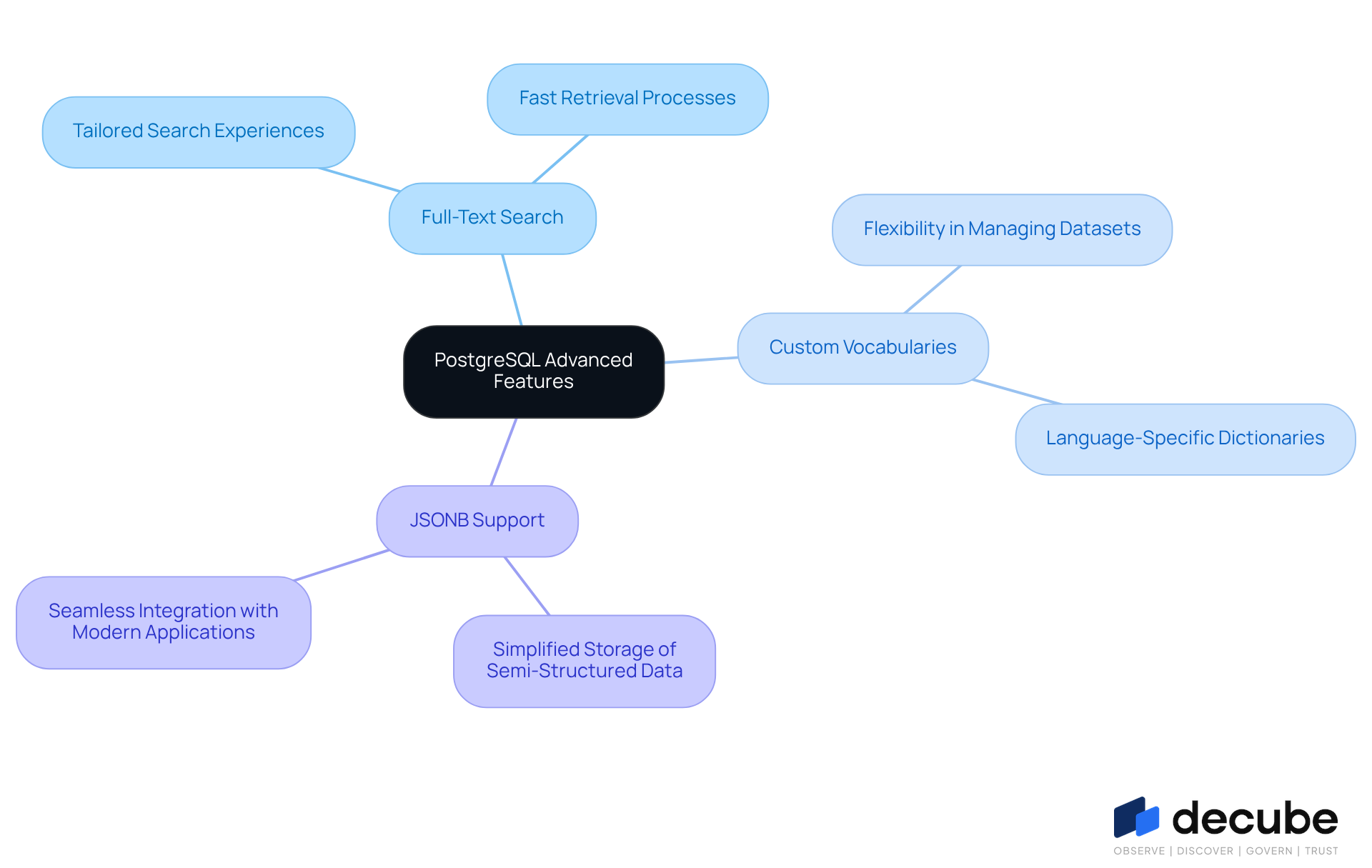
PostgreSQL offers that significantly enhance its functionality as a reference tool, including and . These features enable engineers to create , thereby improving . The ability to define or applications provides greater flexibility in managing diverse datasets. Additionally, PostgreSQL's support for , facilitating seamless integration with modern applications.
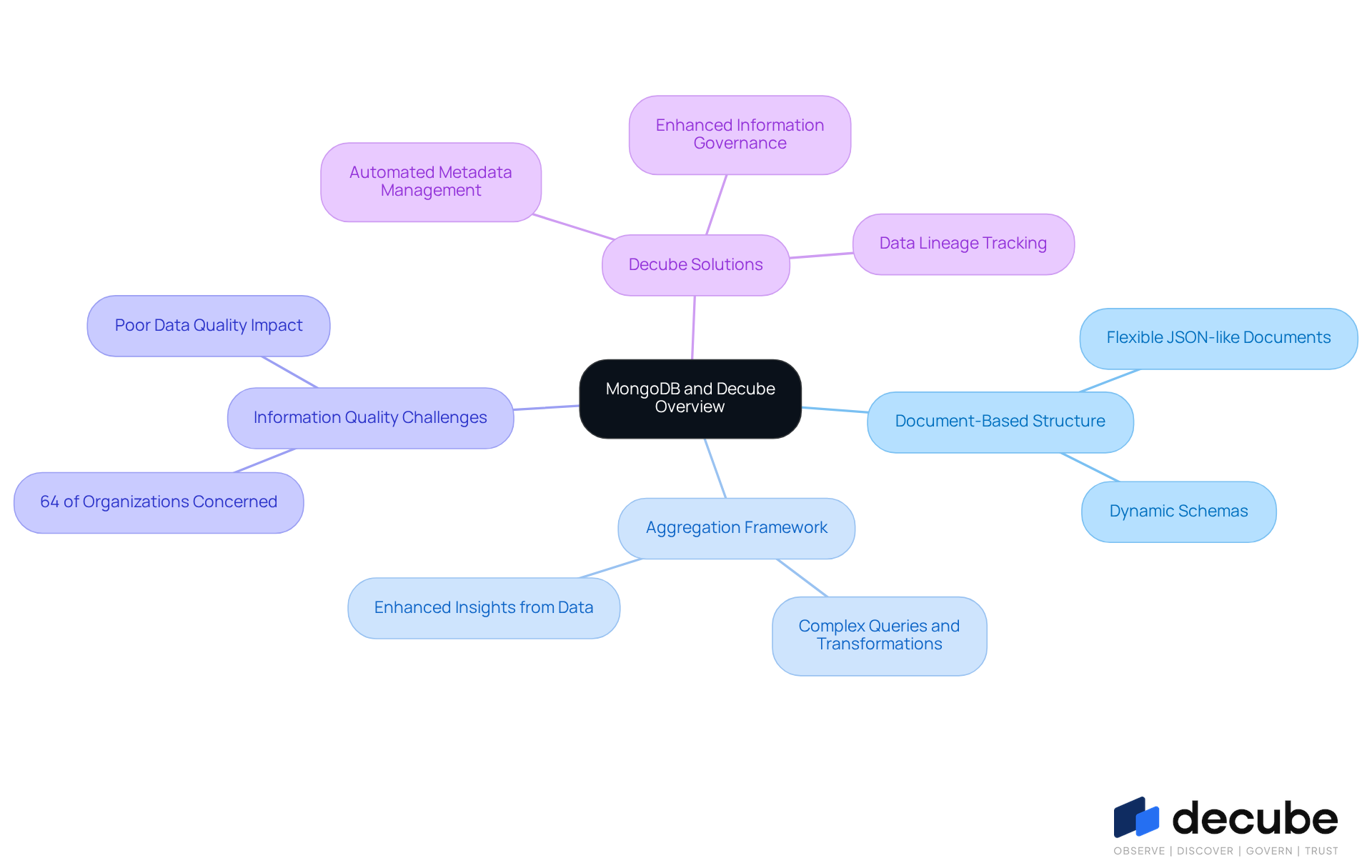
MongoDB functions as a document-focused system, storing information in flexible, JSON-like documents that accommodate dynamic schemas. This adaptability is crucial for information specialists, allowing them to respond swiftly to evolving information requirements without the constraints of rigid frameworks. The database dictionary example within MongoDB includes vital metadata regarding collections, documents, and indexes, providing a comprehensive overview of the database's architecture.
Utilizing MongoDB's aggregation framework enables engineers to execute complex queries and transformations, significantly enhancing their capacity to derive valuable insights from extensive collections. Nevertheless, challenges persist, as , underscoring the need for .
Decube's automated crawling feature addresses this issue by facilitating seamless and secure access control, thereby enhancing and governance. By integrating Decube, information engineers can ensure their data remains accurate and consistent, streamlining collaboration across teams and improving overall information quality.
Furthermore, Decube's lineage feature bolsters clarity within information pipelines, enabling teams to track and maintain trust in their content. With the to reach USD 105.40 billion by 2026, MongoDB's flexible schemas and advanced features, combined with Decube's capabilities, position them as a preferred choice for modern engineering practices.
MySQL's information catalog acts as a centralized repository for metadata concerning objects such as tables, columns, and indexes. The transition to by storing the dictionary in transactional tables, which not only boosts performance but also enhances reliability. Data engineers can effectively leverage MySQL's INFORMATION_SCHEMA to query metadata, yielding critical insights into database structure and usage patterns. This capability is vital for maintaining information integrity and adhering to governance policies, thereby enabling organizations to manage their assets efficiently and comply with regulatory requirements.
To further enhance , integrating Decube's unified trust platform can be transformative. Decube offers advanced and intelligent alerts, ensuring that information remains accurate and consistent. Its seamless integration with existing information stacks, including MySQL, empowers engineers to monitor quality effortlessly, , and maintain transparency across pipelines. This combination of MySQL's robust information management with Decube's for effective governance and observability.

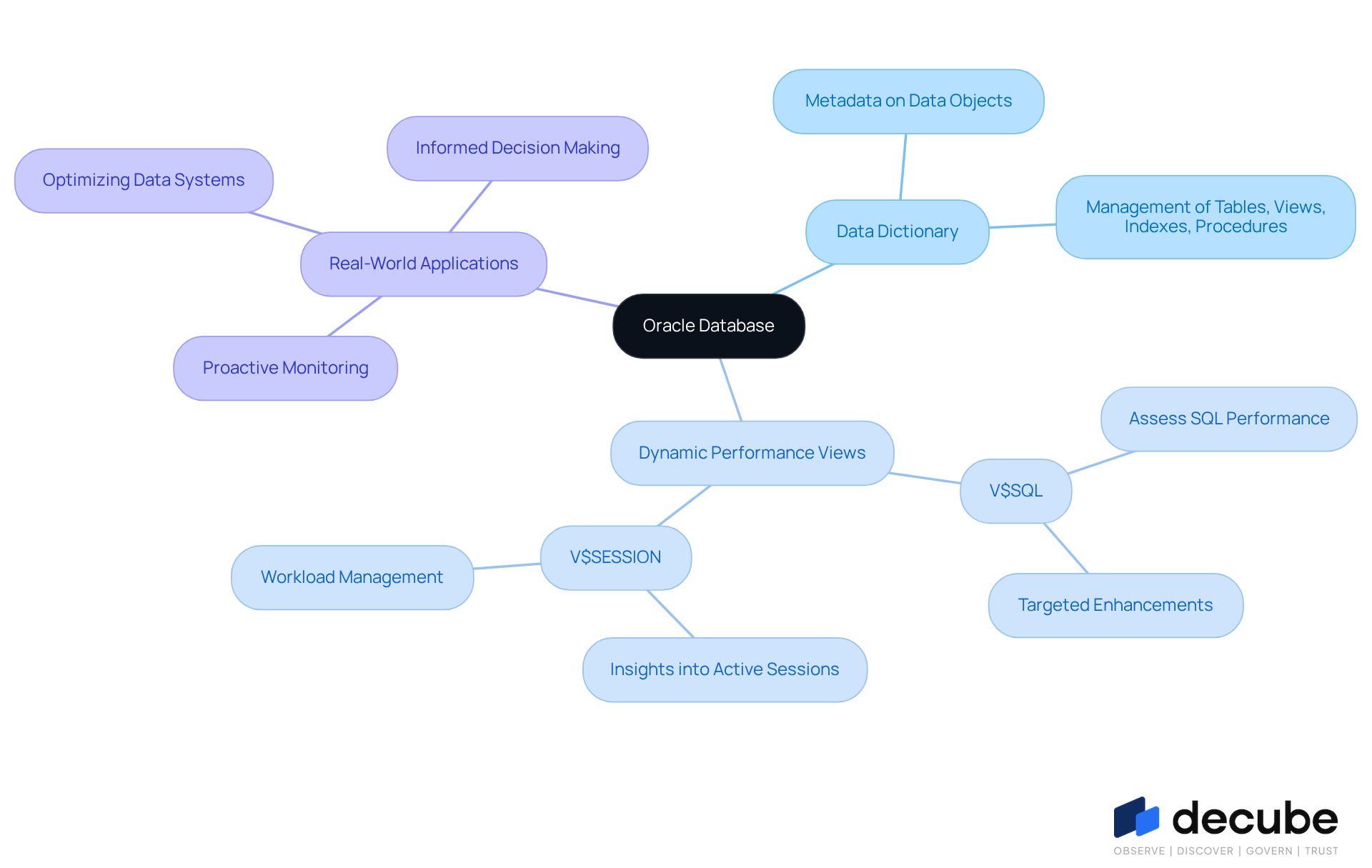
features a comprehensive data dictionary that provides detailed metadata about all data objects, including tables, views, indexes, and stored procedures, which are essential for effective management. Data specialists can utilize Oracle's to monitor system performance and optimize queries efficiently. In 2023, Oracle Cloud Infrastructure (OCI) introduced new services, including and enhanced security, which further augment the capabilities of these performance views.
Real-world applications of illustrate their effectiveness in optimizing data systems. For instance, by analyzing the V$SQL view, analysts can assess the performance of SQL statements, enabling targeted enhancements that lead to faster query responses and reduced resource consumption. Additionally, the V$SESSION view provides insights into active sessions, aiding professionals in managing workloads and ensuring optimal database performance.
Expert insights highlight the strategic advantage of leveraging these . They facilitate proactive monitoring and empower engineers to make informed decisions that enhance overall system efficiency. In 2024, Oracle's cloud services and license support segment generated nearly US$39.4 billion in revenue, underscoring the significance of Oracle's solutions in the current market landscape. The benefits extend beyond performance; Oracle's robust security features, along with its , ensure while managing large volumes of data seamlessly. This comprehensive approach positions as a striving to maintain . Furthermore, updates to in 2026 reflect Oracle's commitment to continuous improvement in its data management solutions.
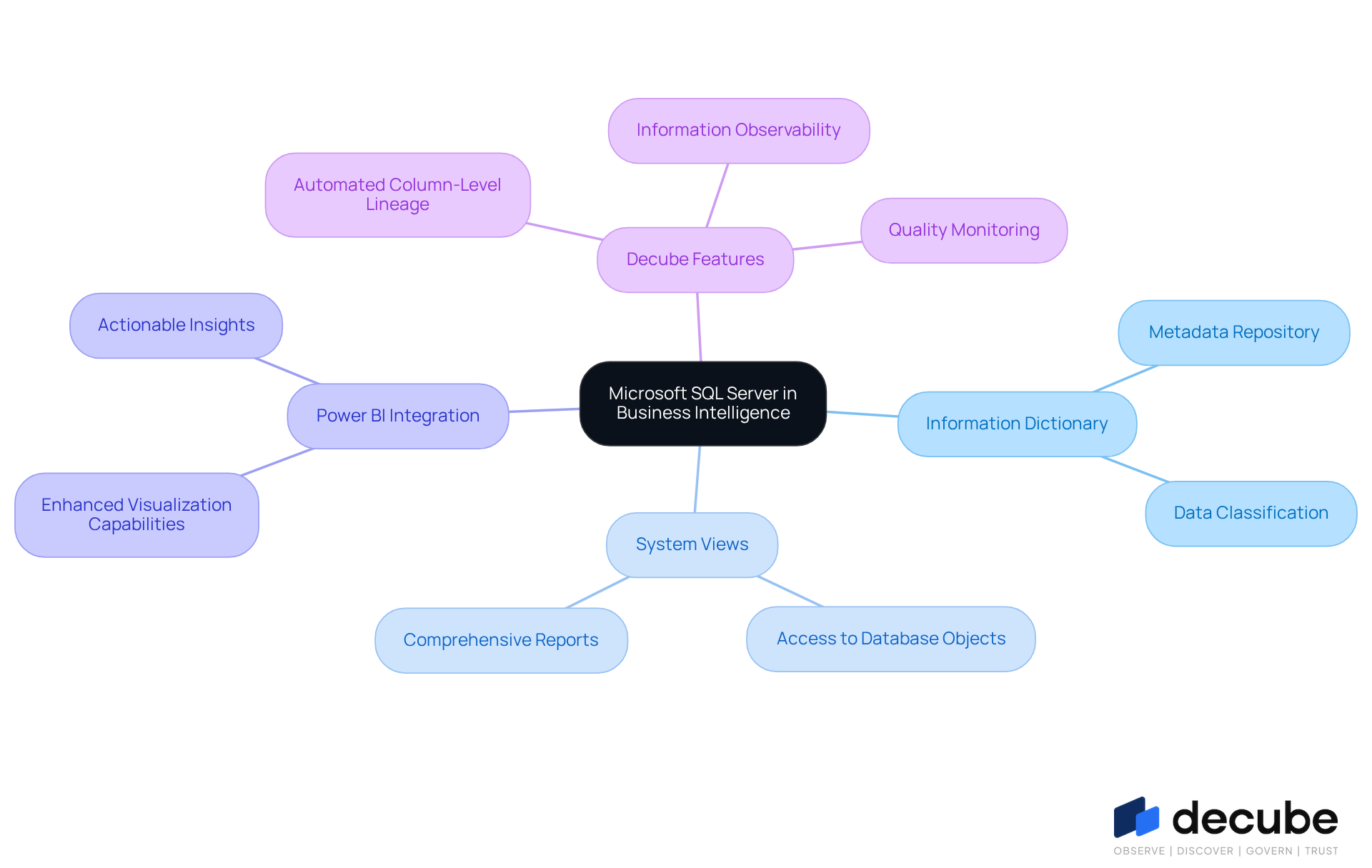
Microsoft SQL Server's information dictionary serves as a vital repository of metadata, essential for effective business intelligence applications. Data engineers can leverage SQL Server's system views to access detailed information about database objects, which facilitates the creation of comprehensive reports and dashboards. The integration of SQL Server with Power BI significantly enhances visualization capabilities, enabling organizations to derive actionable insights from their data. Furthermore, are crucial for identifying and protecting , ensuring . This organized approach not only simplifies information management but also allows organizations to maintain .
Incorporating Decube's and information observability features can further augment SQL Server's capabilities. Users have noted that Decube's and seamless integration with existing information stacks, such as MySQL, greatly enhance . By utilizing Decube alongside SQL Server, engineers can ensure their data remains accurate and consistent, ultimately supporting improved decision-making processes.
SQLite is recognized as a self-contained, serverless database engine, particularly well-suited for . The database dictionary example offers , columns, and types, enabling developers to manage information with precision. The lightweight architecture of SQLite allows for , making it a preferred choice among mobile developers. Notably, SQLite has been integrated into the Android OS since 2006 and included in Apple's iOS in 2007, highlighting its importance in mobile development.
Furthermore, SQLite is utilized in Internet of Things (IoT) devices for storing sensor data and device configurations, demonstrating its reliability and compact size. By leveraging SQLite's capabilities, engineers can implement that enhance application performance while ensuring information integrity. This architecture is particularly beneficial in mobile , where efficiency and reliability are paramount.
As OTW Master emphasizes, is poised to expand, making it a vital topic of study for those involved in . With by 2013, SQLite's widespread adoption underscores its relevance in the industry.

Redis serves as an in-memory key-value store, providing rapid access to information and robust storage capabilities. Its information dictionary facilitates effective management of key-value pairs, making it ideal for applications in caching and . Engineers can leverage Redis's , such as hashes and lists, to optimize both retrieval and storage processes. Furthermore, Redis's ability to persist data ensures that organizations maintain while enjoying the speed and flexibility inherent in in-memory processing.

Cassandra is a distributed NoSQL database specifically designed to manage large volumes of information across multiple nodes, establishing itself as a cornerstone of modern information architectures. Its information repository serves as a vital source of metadata, detailing tables, columns, and types of information. This structure enables data engineers to navigate and manage information effectively within a distributed environment.
Unlike a conventional database dictionary example that merely lists technical fields and definitions, Cassandra's encompasses business context, ownership, lineage, quality indicators, and governance policies. This approach transforms information from being merely recorded to becoming functional. The platform's allow organizations to seamlessly enhance their , accommodating increasing information demands without sacrificing performance.
For instance, , and Apple, , leverage Cassandra's architecture to ensure rapid access and reliability. Furthermore, , query and pipeline parsing, and scheduled crawls keep assets up-to-date, while steward workflows and change notifications maintain the accuracy of definitions and ownership over time.
It is crucial for professionals in the field to ensure that network and hardware resources are sufficient when scaling Cassandra, gradually adding nodes to avoid overloading individual nodes. By utilizing Cassandra's advanced features, information specialists can implement effective management strategies that uphold , ultimately driving operational efficiency and supporting business growth.

Apache Hive serves as a built on Hadoop, specifically designed for querying and managing large datasets. The database dictionary example plays a crucial role, providing , columns, and types. This functionality enables information specialists to . By integrating seamlessly with Hadoop, Hive supports the efficient processing of extensive datasets, making it an indispensable tool for organizations seeking to . Additionally, data engineers can leverage Hive's capabilities to implement effective , ensuring throughout their operations.

In conclusion, the importance of database dictionaries in data engineering is paramount. These tools are vital for enhancing data management, ensuring that information remains organized, accessible, and compliant with industry standards. By utilizing various database dictionaries, data engineers can streamline their workflows, elevate data quality, and support informed decision-making within organizations.
Key examples such as:
demonstrate the diverse functionalities and benefits of different database dictionaries. Each platform presents unique features tailored to specific data management requirements, ranging from Decube's enhanced observability and governance to the flexibility offered by MongoDB’s document-based approach and the robust performance monitoring capabilities of Oracle.
As the field of data engineering evolves, adopting these database dictionary solutions is essential for organizations aiming to uphold high data quality and operational efficiency. Data engineers should actively explore and implement these tools to fully leverage their data assets while adhering to best practices in governance and compliance. The future of data management hinges on the effective application of these dictionaries, facilitating informed decision-making and strategic growth.
What is Decube and what are its main features?
Decube is a comprehensive information dictionary designed for observability and governance, providing a centralized repository for information. Its key features include automated crawling for metadata management, column-level lineage mapping, and automated policy management.
How does Decube help organizations maintain information quality?
Decube helps organizations maintain high information quality and comply with industry standards such as SOC 2 and GDPR by providing tools for metadata management, access control, and facilitating informed decision-making.
What role does the approval flow in Decube play?
The approval flow in Decube reinforces access control by managing who can access or edit information, ensuring that data management is secure and regulated.
What is the business glossary initiative in Decube?
The business glossary initiative in Decube fosters collaboration and domain-level ownership among teams, enhancing communication and understanding of information across the organization.
What advanced features does PostgreSQL offer for database dictionaries?
PostgreSQL offers advanced features like full-text search capabilities and custom vocabularies, allowing engineers to create tailored search experiences and manage diverse datasets effectively.
How does PostgreSQL handle semi-structured information?
PostgreSQL supports JSONB formats, which simplifies the storage of semi-structured information and facilitates seamless integration with modern applications.
What is the primary function of MongoDB in relation to database dictionaries?
MongoDB functions as a document-focused system that stores information in flexible, JSON-like documents, accommodating dynamic schemas and allowing for quick responses to evolving information requirements.
What capabilities does MongoDB provide for data analysis?
MongoDB's aggregation framework enables engineers to execute complex queries and transformations, enhancing their ability to derive valuable insights from extensive collections of data.
What information quality challenges do organizations face, and how does Decube address them?
64% of organizations identify insufficient information quality as a primary concern. Decube addresses this by providing automated crawling for metadata management and secure access control, enhancing information observability and governance.
How does Decube's lineage feature contribute to information clarity?
Decube's lineage feature allows teams to track data flow within information pipelines, enhancing clarity and trust in the content by showing how data moves through the system.

First step to AI Readiness
Table of Contents
Sneak peek from the data world.


Book a 30-min demo with us and see how lineage, quality, governance, and compliance come together in a single platform.
_For%20light%20backgrounds.svg)
.svg)




.webp)